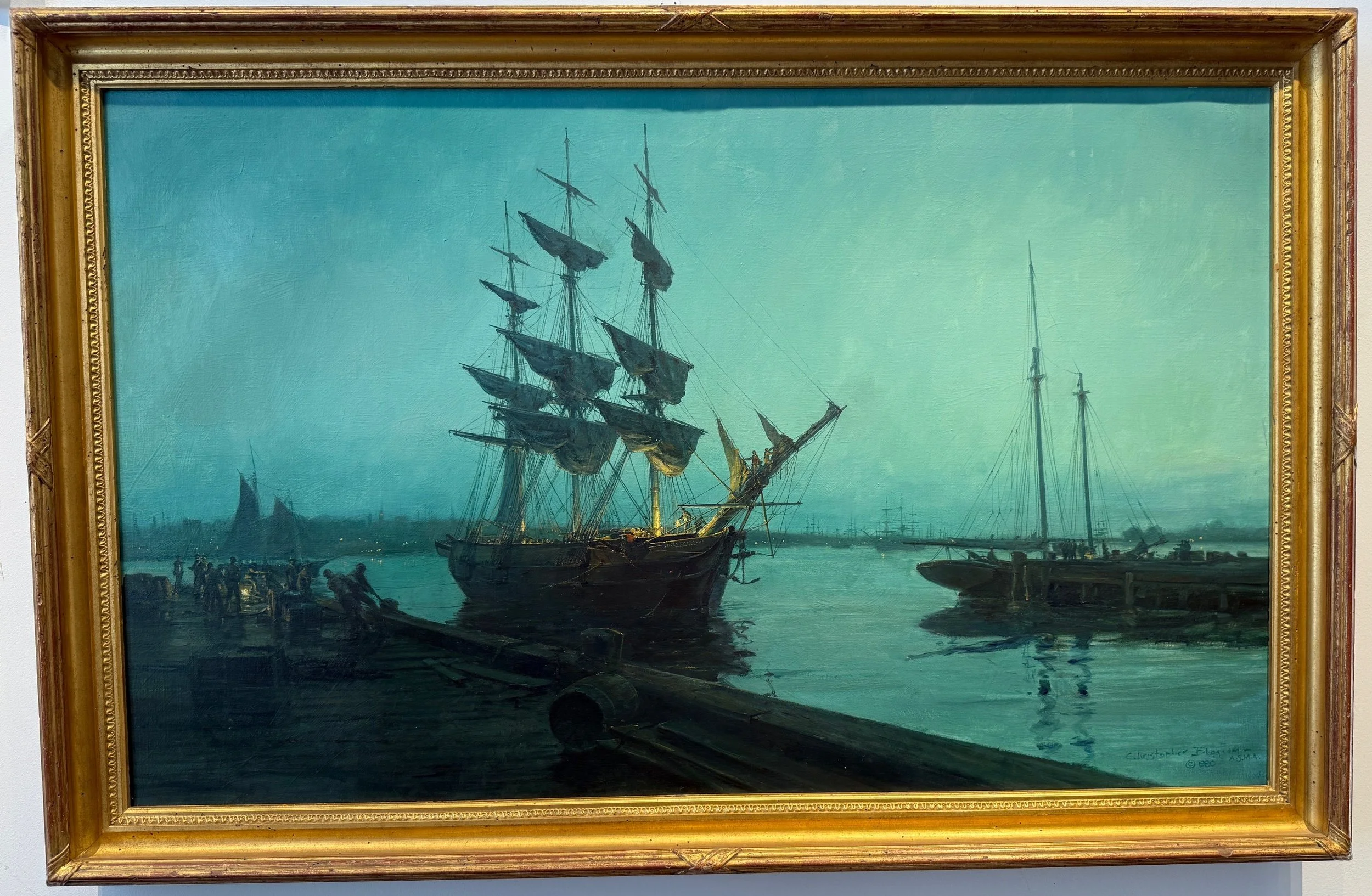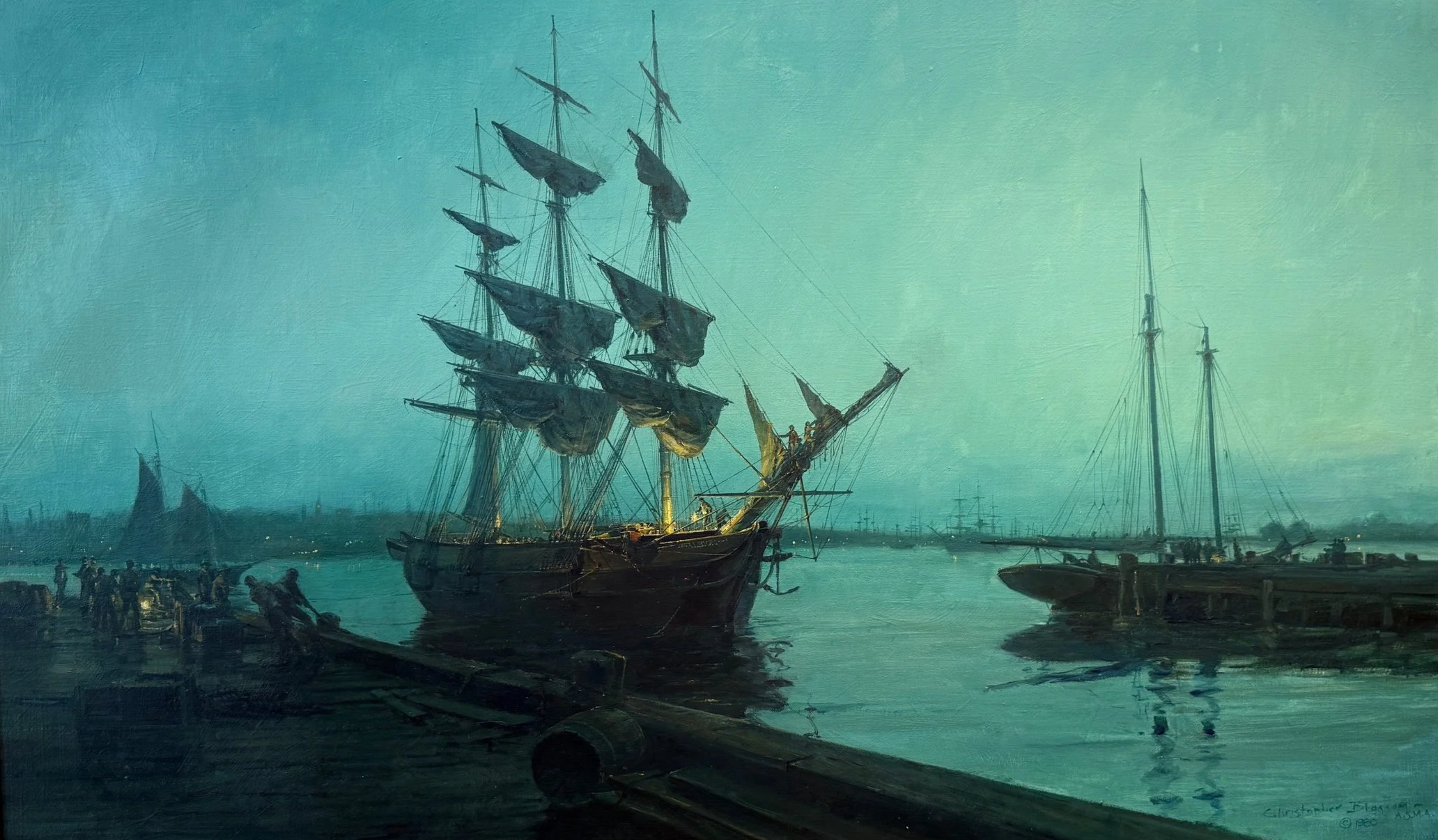
Black Ball Packetship ALBION, New York, c. 1918
oil on canvas, 26” x 42”
(framed dimensions: 31” x 46”)
$40,000
Artist Christopher Blossom has created this atmospheric, marine masterpiece in the spirit of the beautiful nocturnes of 19th century painters like Thomas Moran (1837-1926); Frederic E. Church (1826-1900); and James McNeill Whistler (1834-1903). The sun has recently set completely, throwing the entire scene into partial darkness. The glowing twilight sky before the stars appear, is reflected in the still harbor. The wharf and surrounding buildings are thrown into darkness. The Packetship ALBION has just arrived from its Trans-Atlantic run from Liverpool, England, and the sailors ashore and aboard the ship are seen “warping” her in - manually pulling on lines to bring her snug to the dock. The only visible light is the glow from lanterns on the deck of ALBION. What a beautiful scene…
Packetships were similar to other small 19th-century vessels that carried mail, cargo and passengers. The Black Ball Line of Trans-Atlantic Packets, established in 1817 by a group of New York Quaker merchants, was the first regularly scheduled transatlantic shipping service between New York and Liverpool. Before its founding, ships crossed the Atlantic only when full, with no fixed schedule. The Black Ball Line revolutionized maritime travel and commerce by committing to sail on set dates, regardless of cargo or passenger load. This innovation not only increased reliability in international trade but also helped transform New York City into a major global port and gateway for immigration throughout the 19th century.
A ship left New York on the first of every month. The Black Ball Line started out with four ships. The ALBION, under Captain John Williams, was the line’s fifth ship, added in 1819. It had a capacity of 447 tons. The ships took an average of 23 days to sail to Liverpool and 40 days to make the return journey to New York.